

Magic Lens Photo Media · Real Estate Media
A cinematic real estate video earns its place when movement explains something worth seeing: the approach to the entrance, the connection between rooms, the transition to an outdoor living area, or the relationship between a home and its site.
For an Orlando listing agent, the decision starts with that visual opportunity. A more expensive property does not automatically need a longer film, and camera movement has little value when it simply repeats information the photographs already explain.
Choose the video’s main job
Complete one sentence before choosing a production style: “The viewer needs to understand how ____ connects to ____.” An indoor-outdoor connection, a sequence of entertaining spaces or the approach across a larger site can produce a useful answer.
If the answer is only “show that this is a beautiful house,” refine the brief. Identify the actual feature that supports that description. This gives the videographer a reason for each movement and helps the agent review the finished piece.
Understand the formats before comparing them
A cinematic property film uses selected scenes, pacing and composition to present the home. A more continuous walkthrough emphasizes a route through the rooms. A short Reel focuses attention on a compact idea. An interactive 3D tour lets a viewer choose where to explore. These formats can complement one another because they serve different viewing tasks.
For an interactive-tour comparison, use the FPV versus 3D tour guide. If your main need is a short social piece, start with the listing Reels guide.
Three scene problems that motion can address
Arrival: A deliberate approach can connect the front elevation with the entrance. Keep the movement long enough to establish orientation without spending the opening on empty pavement.
Room connection: Moving through a doorway or around a carefully chosen point can explain how the kitchen relates to the living area. The camera should reveal that connection rather than circle a room simply because it can.
House and site: On a larger property, a sequence may need both ground views and aerial context. The Haines City portfolio photograph below shows the home, workshop and surrounding land. It is a still-image reference for the spatial question, not evidence of a video shot list or flight that took place.
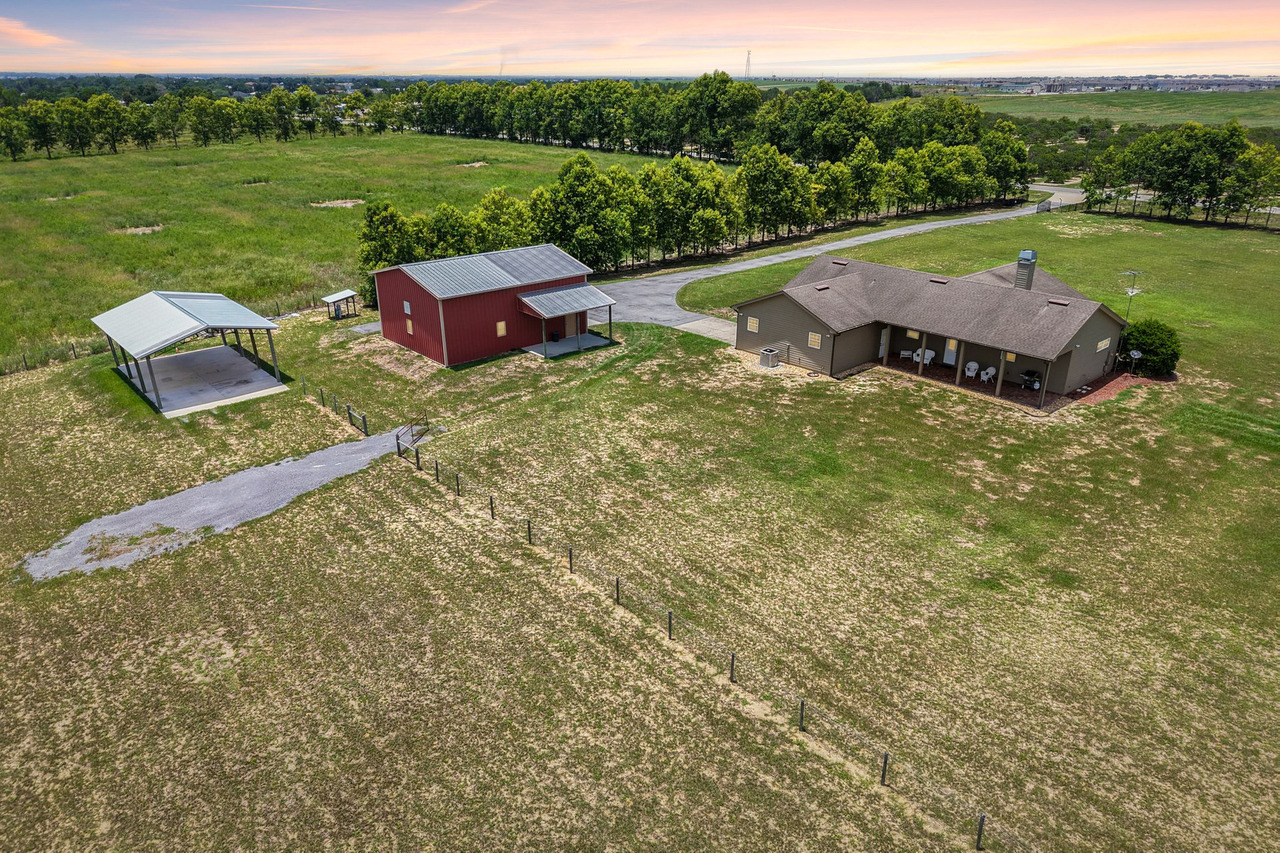
The Haines City media case study provides the documented project context. Actual aerial coverage must be planned for the site and conditions rather than assumed from a sample image.
A simple sequence to discuss
- Establish: Identify the home and the feature that gives the film its purpose.
- Connect: Show the relevant route or relationship between spaces.
- Inspect: Add a small number of details that support what the viewer has already seen.
- Resolve: Return to the main feature or complete the movement toward the exterior.
- Direct: Give the viewer the appropriate next step for the channel where the film will appear.
This is a proposed structure, not a required length. A scene should remain only if it adds information, improves orientation or gives an important feature enough time to register. Music and transitions should support those decisions.
When to spend the effort elsewhere
If the home is not ready for photography, preparation may be the first priority. If the gallery has no clear room overviews, solve that gap. If the central problem is an unclear floor plan, a plan or interactive format may be more useful than a highly edited film.
Also decide where the video will actually be used. An unused file adds no information to a listing. The no-waste media guide helps connect each deliverable to a distribution purpose.
Send a brief the videographer can work from
- The address, listing status and shoot readiness.
- The principal connection or feature the film should explain.
- The intended website, listing or social placements.
- Required orientations and versions, including branding needs.
- Access, timing and any occupied areas that affect filming.
- The person responsible for reviewing property facts and the final edit.
Agree on the deliverables in the quote rather than assuming that one film includes every crop, branded version or revision. Discuss your property video and review listing media options.
Give your next shoot a clear brief.
Send the property link, three priorities and the places where the media will appear.