

Choose FPV when a planned sequence helps explain the property. Choose a self-guided 3D tour when viewers need to inspect rooms and layout at their own pace.
FPV video and a 3D virtual tour may both help someone experience a property remotely, but they solve two very different problems.
FPV controls the experience.
A 3D tour gives control to the viewer.
That distinction matters more than deciding which technology looks newer or more impressive.
What does this property need the viewer to do?
Why FPV and 3D Are Different Tools
An FPV tour is a video with a selected route and an edited sequence.
A self-guided 3D tour lets the viewer choose among the viewpoints captured for the tour.
Both can introduce a property remotely, but they give the viewer different ways to examine it.
Choose by the question the media needs to answer, rather than treating one format as an upgrade to the other.
What Zillow Announced in March 2026
The technology has changed too.
On March 13, 2026, Zillow described updates to its HDR processing, AI-assisted image enhancement and tour navigation. Its announcement says viewers can click within a scene to move, while directional arrows remain available. [1]
Zillow supports tours paired with interactive floor plans. Confirm that the ordered service includes the floor plan and the intended rooms; a generic “3D tour” label does not define those deliverables. [2]
So no, I would not tell a Realtor in 2026 to “forget the 3D tour.”
Choose according to the need for guided storytelling, self-guided exploration or both.
What an FPV Drone Tour Actually Does Best
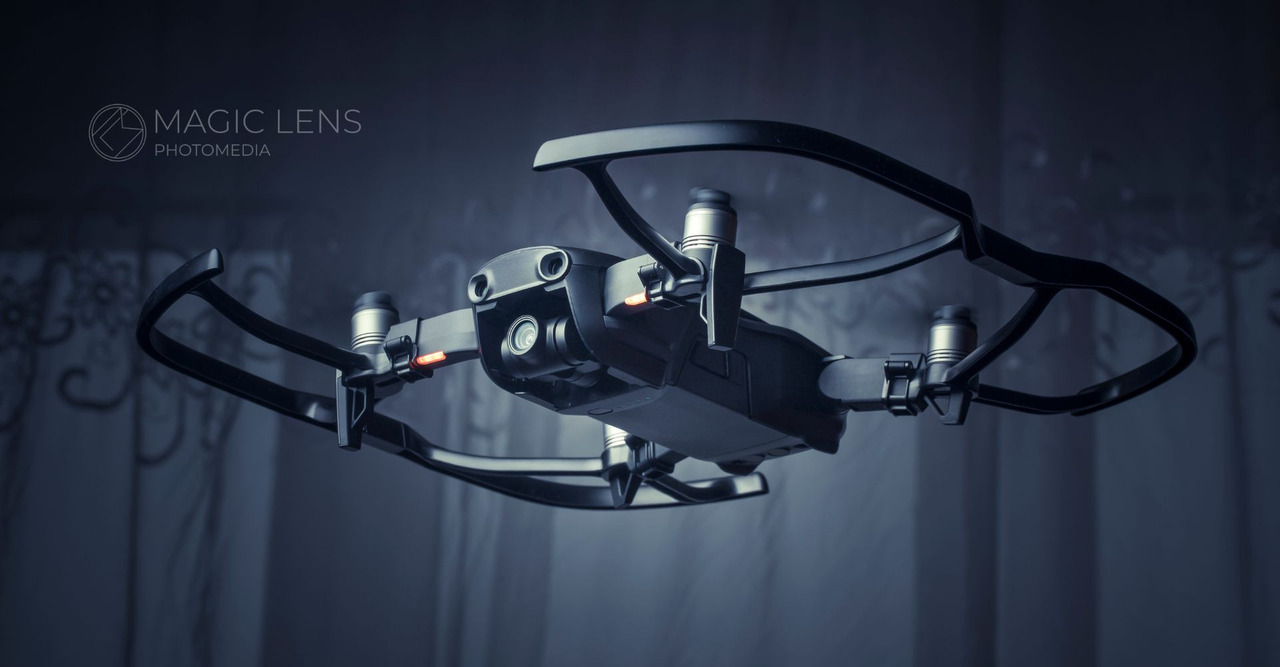
There are houses where I walk in and almost immediately know FPV could work.
Maybe the front door opens directly into a great room. Maybe the kitchen flows naturally toward the pool. Maybe there is a route through the house that already feels like a sequence.
In those properties, the drone is not flying just because it can.
The movement actually helps me explain the house.
With FPV, I decide where the experience begins, which spaces deserve more attention and where the final reveal happens.
- Move continuously from exterior to interior
- Reveal an indoor-outdoor connection
- Fly through large entertaining spaces
- Create transitions between rooms
- Show architecture through movement
- Build a beginning, middle and ending
- Create strong short-form social content
See the Difference: A Real FPV Example
This is the kind of project I mean.
Watch what happens when the camera moves through the property instead of simply showing one room after another.
The viewer is not searching for rooms. I am deliberately guiding the experience.
What a Zillow 3D Tour Does Better
A Zillow 3D Home tour works almost in the opposite direction.
I stop deciding where the viewer needs to look next.
The buyer takes over.
That becomes useful when someone is trying to answer practical questions about the property.
- Where is the primary bedroom?
- How close are the secondary bedrooms?
- Does this hallway connect to the kitchen?
- Is the office near the entrance?
- How does the upstairs relate to the downstairs?
- Could this layout work for a multigenerational family?
As checked on October 3, 2026, Zillow’s FAQ describes an unbranded tour link and sharing through social media, email and text. For for-sale homes, it lists Zillow and Trulia distribution plus syndication to Redfin and Realtor. Confirm the destination’s current requirements and check the actual listing after delivery. [2]
The Floor Plan Changes the Comparison
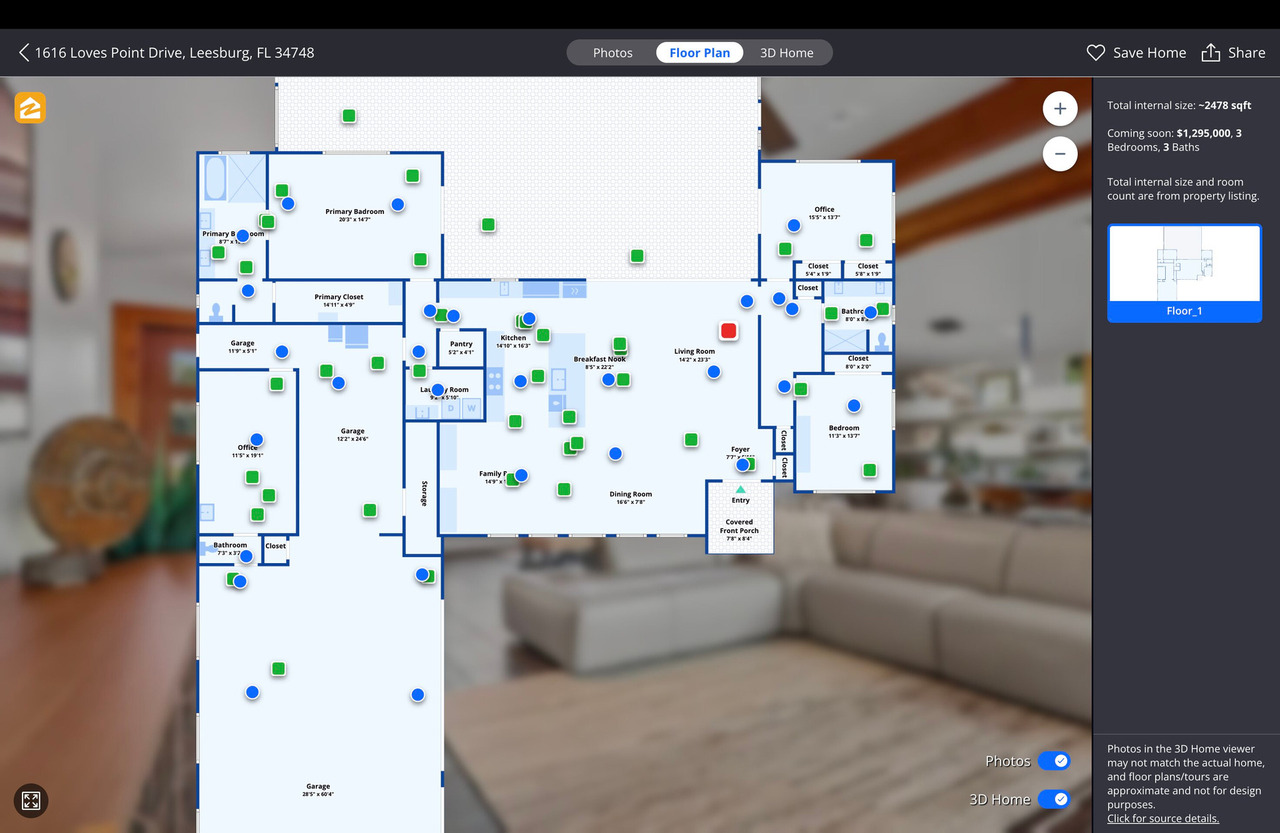
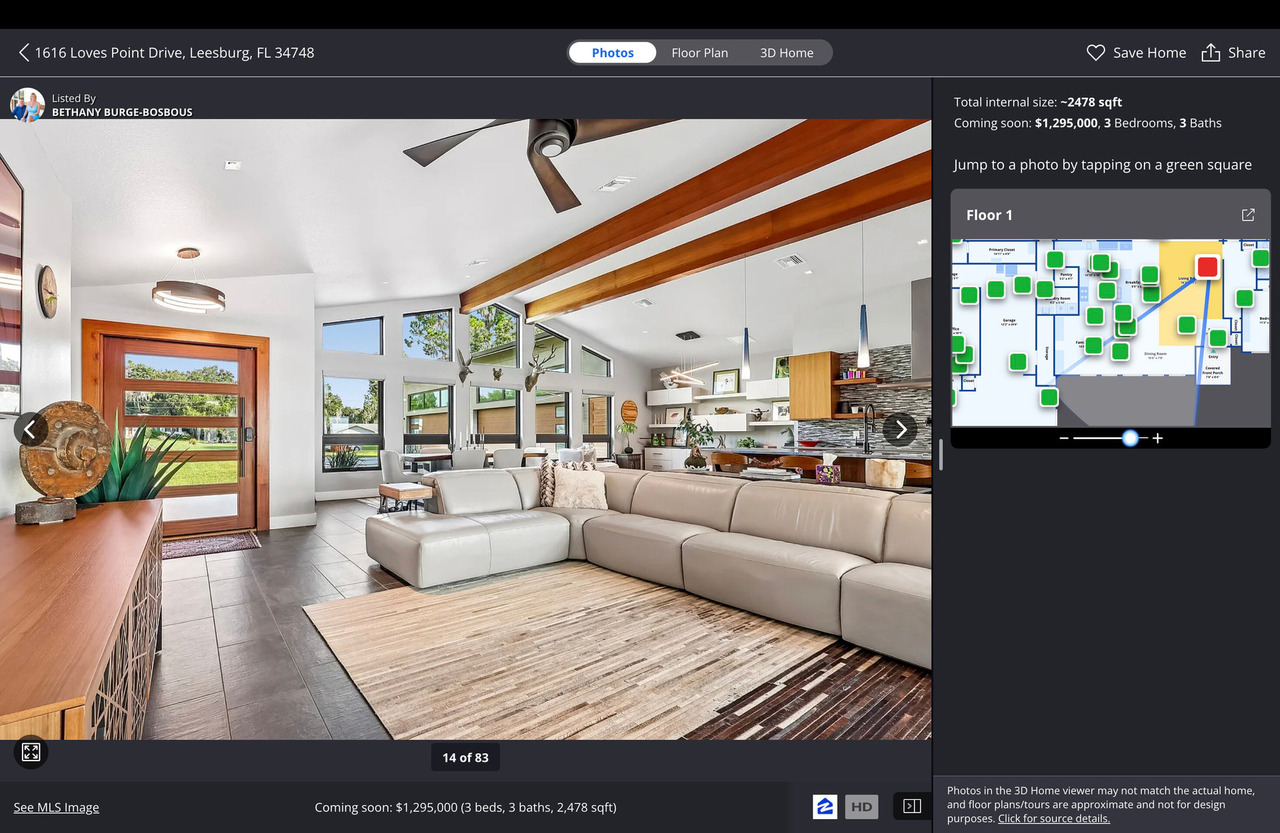
A floor plan adds a layout reference that an FPV video alone does not provide.
FPV can show flow beautifully.
But it does not give the buyer a map.
An interactive floor plan gives the viewer a completely different kind of information.
FPV answers: what does the selected route through the property look like?
3D with a floor plan helps answer: where are the spaces, and how do they relate?
FPV vs. 3D Tour: The Practical Difference
Guided Experience
The photographer controls what the viewer sees and in what order.
- Cinematic movement
- Emotional presentation
- Architecture through motion
- Indoor-outdoor transitions
- Strong social media use
- Curated visual story
Self-Guided Exploration
The viewer controls where to look and how long to explore.
- Room-by-room exploration
- Layout understanding
- Interactive floor plan when included
- Remote buyer research
- Listing integration
- Shareable access subject to the destination’s requirements
Which One Is More Immersive?
That depends on what you mean by immersive.
FPV may feel more cinematic because the viewer experiences continuous motion.
A 3D tour may feel more exploratory because the viewer can stop and investigate the property personally.
A self-guided tour lets the viewer choose the next viewpoint.
Neither definition of immersion is automatically better.
When I Would Choose FPV
The property has a story that becomes stronger through movement.
- A luxury home with strong architectural transitions
- A dramatic entry sequence
- Indoor-outdoor living
- A pool that visually connects to the interior
- A vacation home with themed spaces
- A builder or designer wanting a cinematic portfolio piece
- A Realtor who needs highly visual social content
When I Would Choose a 3D Tour
The buyer needs to investigate the property rather than simply experience it.
- Relocation buyers
- International buyers
- Large homes
- Unusual layouts
- Multigenerational properties
- Homes with several bedrooms or living areas
- Buyers evaluating a listing remotely before scheduling a showing
When I Would Use Both
This is where the comparison becomes much more useful.
Some properties genuinely benefit from both.
Imagine a large luxury home in Central Florida with a strong entrance, open living area, outdoor kitchen and pool.
I might use FPV to introduce the property—to take the viewer from the entrance through the main living space and finish outside.
Then the serious buyer can open the 3D tour and start investigating bedrooms, bathrooms, hallways and the floor plan at their own pace.
FPV can create desire.
3D can help answer questions.
Those jobs complement each other.
When I Would Use Neither
There are also listings where neither asset deserves priority.
A straightforward home with a simple layout, limited marketing budget and no meaningful movement story may be served perfectly well by strong photography and a floor plan.
That is the same way I think about drone photography.
I do not want to add a service simply because I offer it.
Every piece of media should have a reason to be there.
A Simple Decision Matrix for Realtors
These are format differences, not performance scores. A completed tour should be checked for missing rooms, navigation and the promised floor-plan coverage.
What About Vacation Homes?
Vacation homes are where FPV can become especially interesting.
I photograph properties around Orlando where the game room, themed bedroom, pool or entertainment area is almost part of the product itself.
In that situation, I may care much more about how I reveal those spaces than about showing them in a traditional room-by-room sequence.
But the objective can change completely if that same vacation home is being sold to an investor.
Now room distribution, sleeping capacity and layout may become much more important.
The intended audience and the marketing objective should guide the choice.
What About Luxury Listings?
Luxury does not automatically mean “use everything.”
There are premium homes where one beautiful video and excellent photography may already tell the story extremely well.
There are others where the architecture is complex, the buyer may be coming from another state or country, and the house has enough going on that both formats make sense.
That decision should come from the property—not from the package name.
The Biggest Mistake: Ordering Media by Trend
A format can look impressive and still leave the buyer’s main question unanswered.
Start by identifying that question before comparing equipment or package names.
The useful comparison is between what each finished asset will let the viewer see and do.
Before recommending either one, these are the questions I would ask:
- Who needs to understand this property?
- What do they need to understand?
- Does movement matter?
- Does self-guided exploration matter?
- Is layout complexity a major issue?
- Will the Realtor actually use the asset?
My Recommendation: Start With the Viewer’s Task
I would not tell a Realtor to choose FPV because it looks newer.
I would not tell them to choose a 3D tour just because it is interactive.
I would first look at the house and ask what the marketing actually needs to accomplish.
Choose 3D when the viewer needs freedom.
Write the route before ordering the FPV tour
A useful FPV brief describes the relationship that movement should explain. “Make it cinematic” leaves the most important decision unanswered.
Beginning
Identify the property or the space. Choose an opening that lets viewers orient themselves before moving into a reveal.
Connection
Name the transition: entry to main living area, kitchen to lanai, or another route that matters to the property. If a conventional camera sequence explains it more clearly, that is a reasonable alternative.
Finish
Choose the feature that completes the route. Allow enough time to understand it instead of ending as soon as the drone reaches the next room.
Hypothetical brief: “Introduce the main living area, show its connection to the covered patio and finish on the outdoor seating. The purpose is to explain that connection, not to include every bedroom in one flight.”
The operator must assess the actual space and whether the proposed route is appropriate. This editorial example does not establish that a particular flight is feasible. Keep people and access arrangements in the production discussion.
Pair the sequence with a self-guided tour or floor plan when viewers still need to inspect the layout. An FPV edit cannot supply interactive navigation, and a smooth transition is not evidence of dimensions, accessibility or a complete floor plan.
Frequently Asked Questions
Is an FPV drone tour better than a 3D virtual tour?
Not universally. FPV is stronger for a guided cinematic experience, while a 3D tour is stronger when buyers need to explore rooms and layout independently.
Does FPV replace Zillow 3D Home?
No. They perform different jobs. FPV is a video experience. Zillow 3D Home allows self-guided exploration and can also be paired with an interactive floor plan.
Can I use both FPV and a 3D tour on one listing?
Yes. For premium, complex or relocation-focused properties, the two formats can complement each other because one creates a curated presentation while the other supports deeper exploration.
Which is better for social media?
FPV video is usually the more natural fit for short-form social content because movement, pacing and sequence can be edited specifically for platforms such as Instagram.
Which is better for remote buyers?
A 3D tour can be especially useful for remote buyers who want to revisit spaces, inspect rooms and understand the floor plan at their own pace.
Does every luxury listing need both?
No. The decision should depend on architecture, layout, likely buyer, marketing strategy and how the Realtor plans to use the final media.
FPV or 3D Tour? Start With the Property.
The right media package is not the one with the most technology. It is the one that helps the right audience understand the property.
Magic Lens provides professional photography, video, drone media, Zillow 3D tours, floor plans and immersive real estate content across Orlando and Central Florida.

Gustavo Sousa
Gustavo Sousa is a professional real estate photographer, videographer and FAA Part 107 Certified Remote Pilot based in Winter Garden, Florida.
A professional photographer since 2012, he works with Realtors, residential listings, vacation homes, builders and real estate media projects throughout Orlando and Central Florida.
References
[1] Zillow — How Zillow Made Virtual Tours Feel Even More Like Being There in Person, March 2026
Zillow 3D Home 2026 image-quality and navigation updates
[2] Zillow — 3D Home FAQ
Current Zillow 3D Home capabilities, sharing, floor plans and supported capture
Research and product references checked October 3, 2026. Survey results describe the cited population and year; they do not guarantee a sale, a price or a marketing outcome.