

REALTOR AI PLAYBOOK · 13
Better Marketing. Stronger Conversations. Practical AI.
“Five reasons to move here” often gives you five interchangeable compliments. A reader planning a move may need something more useful: where to verify a detail, which office handles a question or what to check before relying on a claim.
Start with one sentence: “Before you assume _____ about this area, check _____.” Fill the first blank with a real question you can support. Fill the second with a current, authoritative source. You now have the beginning of a useful local post.
This chapter gives you a complete Orlando example, a source card, a prompt and a small editorial queue for questions about travel, properties, maintenance and local processes. You will leave with a way to explain a specific issue instead of writing another list of generic neighborhood praise.
Choose the question before the format
Begin with a task a person is trying to complete. “Learn about Orlando” is too broad. “Check which jurisdiction an address falls within” is narrow enough to explain, source and turn into a practical next step.
A useful question also has a boundary. You should be able to say what the post answers and what it does not. A post about locating an official address tool is not a complete guide to taxes, utilities, school assignments or permitting.
This boundary gives you an editorial advantage. Instead of stretching one source into a comprehensive promise, you can build several focused pieces over time. Each has its own evidence, purpose and review date.
A verified Orlando example
The City of Orlando's Check Your Address page explains that an Orlando mailing address may fall in unincorporated Orange County or another nearby city. It links to an address locator for checking City of Orlando limits.
Checked October 18, 2026. The page supports an address-checking step. It does not establish the jurisdiction or service eligibility of any property used in this article; no individual address was checked for this demonstration.
This is a source-led teaching example, not a recommendation about where anyone should live.
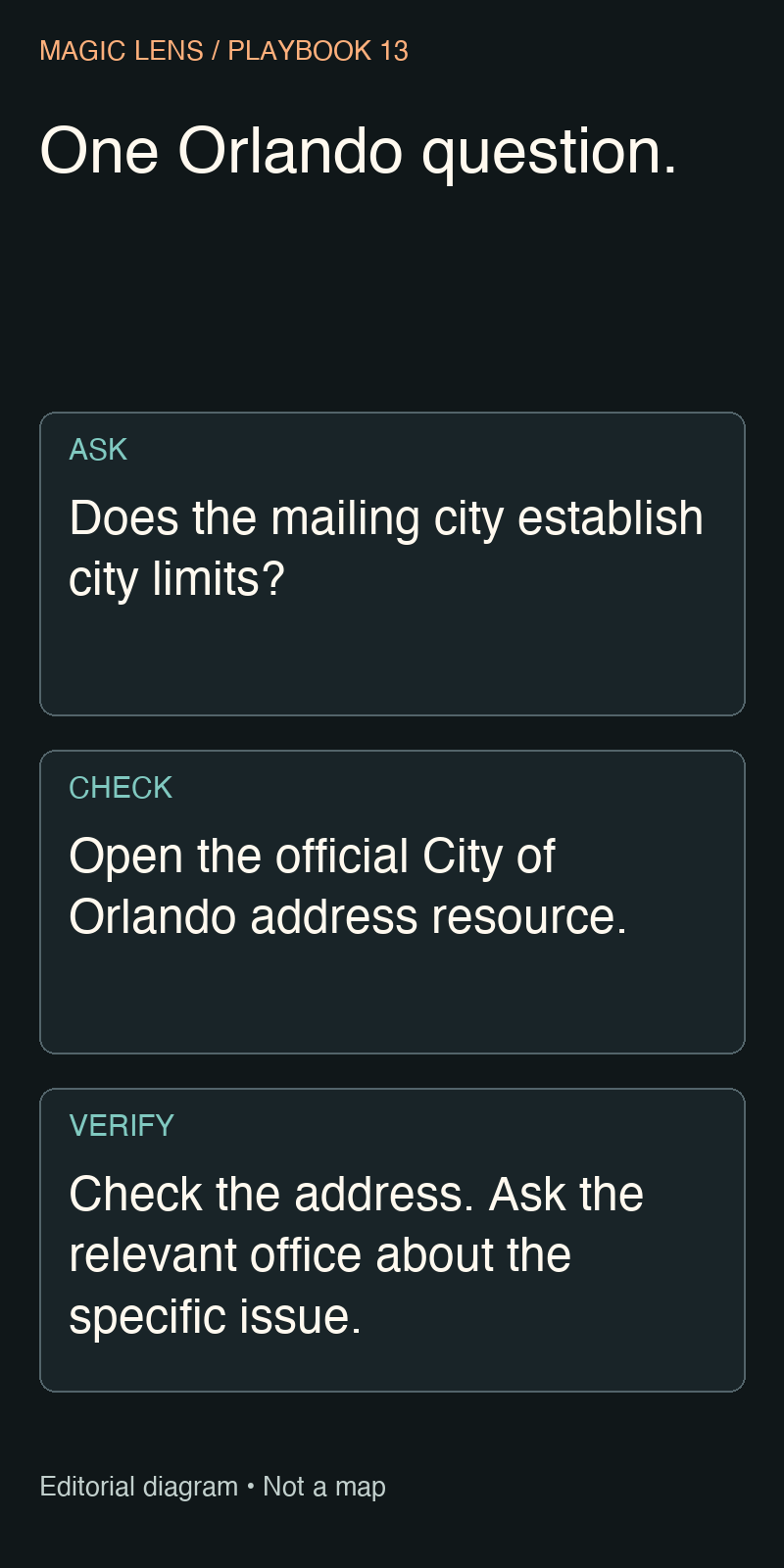
Before and after: replace praise with a task
Before — generic local enthusiasm
“Thinking of moving to Orlando? Great weather, amazing amenities and convenient living make it the perfect place to call home!”
This gives the reader little to do. It also compresses different experiences into broad claims. You cannot make the statement more useful merely by adding a carousel template or more enthusiastic adjectives.
After — a focused process post
“Does an Orlando mailing address mean the home is inside City of Orlando limits? Check the city's official address tool before assuming which jurisdiction applies. Start with the City of Orlando's Check Your Address page, then follow up with the relevant office for your specific question.”
The second version identifies the uncertainty and a practical way to investigate it. The post can end there. It does not need an invented commute time, a claim about neighborhood character or a sales pitch.
Build a source card before asking for copy
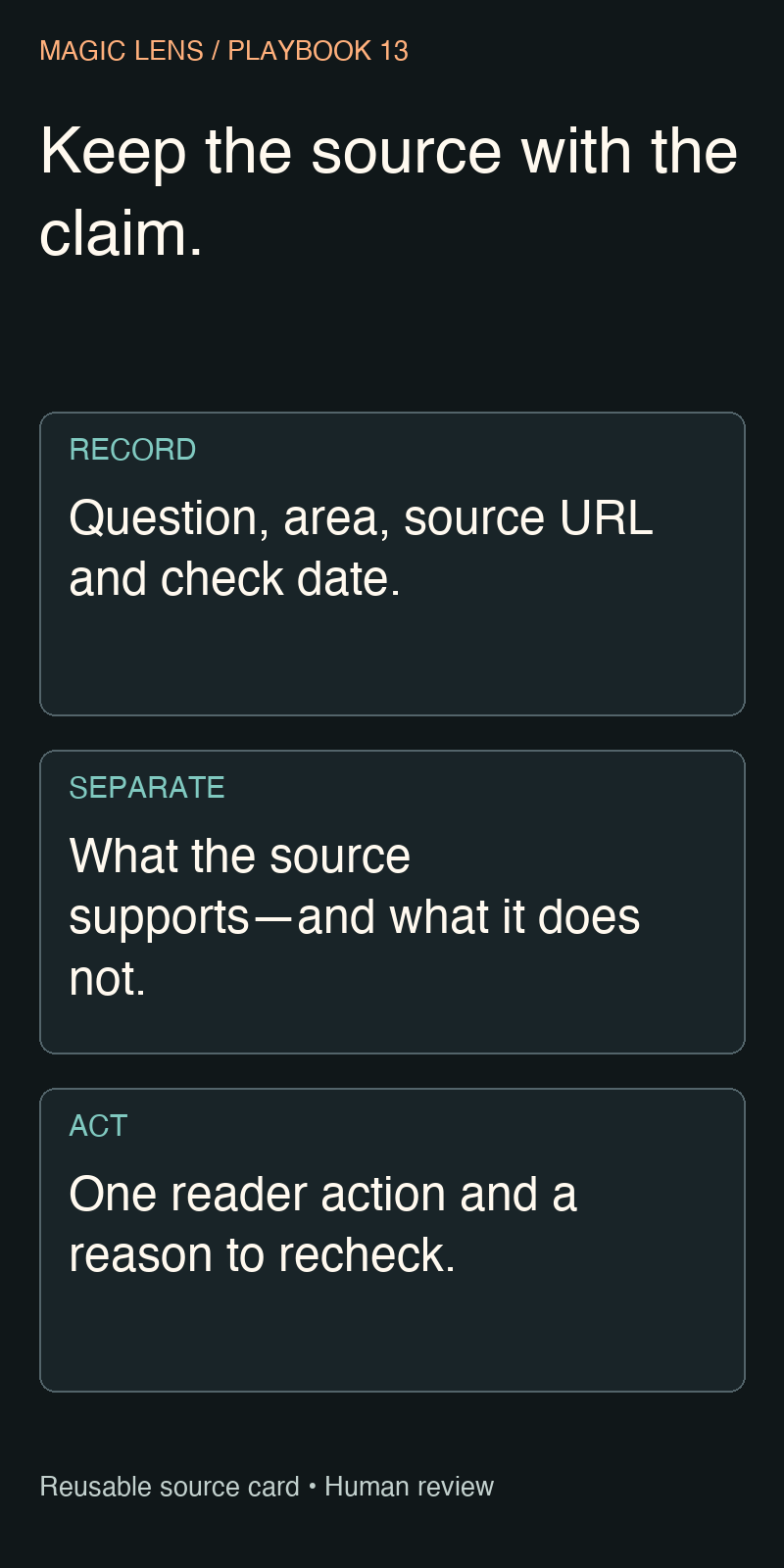
A source card keeps the fact separate from your interpretation. It is useful even if you never open ChatGPT. Copy the structure below into your working document and fill it before drafting.
QUESTION: What specific uncertainty will the post address?
AREA: Which city, county, jurisdiction or property does it concern?
SOURCE: Publisher, page title and exact URL.
CHECKED ON: Date you opened and reviewed the source.
PUBLISHED / UPDATED: Source date, if displayed; otherwise not stated.
SUPPORTED FACT: A short paraphrase, with its limits.
NOT ESTABLISHED: Questions this source does not answer.
READER ACTION: One step the reader can take.
RECHECK TRIGGER: What would make this post need review?
Keep “checked on” separate from “published” or “updated.” Visiting an old page today does not make all its information newly published. If the source does not show an update date, say so in your internal record instead of inventing one.
For the Orlando example, the area is the City of Orlando boundary question; the source is the city's address-check page; the check date is October 18, 2026. A page update date was not displayed in the reviewed text. The recheck trigger is a changed link, tool or city guidance.
Use this prompt to turn the card into a post
Create a useful local real estate post in American English.
Use only the source card below. Do not add facts from memory.

QUESTION: Does the mailing city establish the local jurisdiction?
AREA: Orlando, Florida; specifically City of Orlando limits.
SOURCE: City of Orlando, Check Your Address.
URL: https://www.orlando.gov/Check-Your-Address?lang_update=639262251464556621
CHECKED: October 18, 2026.
SUPPORTED FACT: The city provides an address-checking resource;
an Orlando mailing address alone does not establish city limits.
NOT ESTABLISHED: Any specific property's jurisdiction, taxes,
utilities, school assignment, permits or eligibility for a service.
READER ACTION: Open the official resource and verify the address;
contact the relevant office for a question beyond the tool's scope.

Produce:
1. A specific opening question.
2. A short explanation and one action.
3. A plain-language source note with the check date.
4. A list of anything you cannot establish from this card.

No invented maps, addresses, travel times or neighborhood claims.
Do not recommend where a person should live. Do not imply that
an address lookup was performed for this demonstration.
This prompt deliberately limits the model to the supplied evidence. ChatGPT can organize the explanation, but an attractive answer is not a source check. Open the link yourself and compare each factual sentence with the current page.
A filled editorial plan you can adapt
Working title: “An address question to check before you make assumptions.” Format: one short caption and a simple three-step graphic. Graphic: question → official source → verify the specific detail. The illustration in this article is an editorial diagram, not a map or screenshot of the city's tool.
Opening: use the focused question above. Body: explain the distinction supported by the source. Next step: link to the official page. Source note: identify the city, page and check date. Review: confirm the link works and the wording still matches before posting.
If you adapt the idea to another city, replace the source card first. Do not replace only “Orlando” in the caption. The responsible office, available tool and explanation may differ.
Four local content lanes worth investigating
These are research assignments, not ready-to-publish local claims. Choose one at a time and complete a source card before turning it into content.
Travel: “Which route and time window should I evaluate for my own trip?” Identify the actual start and end points privately, the date and the conditions being evaluated. Do not invent a universal commute or present one observed trip as a guarantee. A post can teach the questions to ask without publishing someone's exact routine.
Property information: “Where can I verify this particular property detail?” Name the record or responsible office you actually reviewed. Keep records, listing descriptions and visual observations distinct. If sources disagree, investigate before publishing a definitive answer.
Maintenance: “Which current guidance applies to this specific upkeep question?” Find the responsible source for the system or issue involved. Explain the question and referral path rather than diagnosing an unseen property. A general content idea is not a substitute for inspection or qualified advice.
Local processes: “What should I have ready before contacting the appropriate office?” Look for an official checklist or instructions. Confirm the jurisdiction and date. Do not turn a summary into a promise that an application will be accepted or approved.
Two refinements that keep the draft useful
Audit the draft against my source card. For every factual claim,
identify the supporting item. Remove claims outside the card.
Separate the reader's next action from any result we cannot promise.
This catches the confident extra sentence that changes the meaning of a careful draft. Do not ask the model to find support after deciding to keep an appealing claim. Start with evidence and let it determine the wording.
Rewrite for a person encountering this local process for the first
time. Explain unfamiliar terms briefly. Keep one question, one
source and one action. Preserve the scope and date notes.
A beginner-friendly explanation should reduce effort without removing necessary distinctions. If it needs five unrelated sources to make sense, narrow the question.
When you do not have enough evidence
Save the idea in a research queue rather than filling the gap with confident language. You can publish a question-based checklist only if it is clear that you are describing what to verify, not claiming the answers are already known.
For example, “Three questions to ask the responsible office” is different from “Everything you need for approval.” The first can be an honest planning aid. The second promises completeness that your evidence may not support.
Avoid ranking areas by who supposedly belongs there. Focus on transparent information and a person's stated practical questions. Have your broker review content that raises professional or compliance questions; this editorial method does not certify compliance.
Your next useful local post
Choose one question you can answer with a current primary source. Complete the source card, write a short draft and check every claim. Then read it on a phone: can someone identify the question, source and next action without hunting?
You do not need to sound like an encyclopedia of the entire city. You need to make one local question easier to investigate. That is a repeatable contribution—and a stronger reason to return to your content than another generic compliment.
Keep this tool
Question → area → source → date → supported fact → limit → next action. Use the same sequence for your next local topic.
Keep local context and property evidence connected
You now have a method for making one local question easier to investigate. When you move from area information to a specific listing, be equally precise about what the images show. Exterior and aerial views can provide visual context; they do not establish boundaries, travel times or other facts that require verification.
For a Central Florida property, compare Magic Lens services and pricing to decide which views would add useful information to your presentation.