
Magic Lens Photo Media · Selling vacation homes
Are you a listing agent marketing an Orlando vacation home for sale to a remote buyer? Give the buyer a connected view of the property: clear photographs of the rooms and features, a floor plan for layout, an interactive tour for circulation, and aerial images where the setting matters. Identify private and shared amenities separately. Then connect the visual presentation to verified property information, inspections and the questions the buyer's agent still needs to resolve.
Make the home understandable from anywhere.
A Realtor selling a vacation home has a different assignment from a host filling next month's calendar. The buyer needs to understand what they may own, how it is arranged and what still needs checking. An impressive pool photo can open that conversation. It cannot carry the whole decision.
The presentation has two jobs
Show the property. Make the next question easier.
Visual information
Room connections, visible finishes, furniture arrangement, outdoor space and the surrounding setting. These are things a well-planned media package can help someone examine.
Verified information
Dimensions, included furnishings, property condition, amenity access and rental rules. Give these questions to the appropriate agent, inspector, owner or association; a photo is not the supporting document.
The photographs below come from my Windsor Cay Resort vacation-home portfolio in Clermont. I am using the gallery to explain a buyer-focused presentation, not reporting a remote purchase or a sales result. The tour and floor-plan recommendations describe additional information to request; no tour or plan for this property is presented here.
Question 01 · How does the house connect?
Let the buyer follow a route through the home.
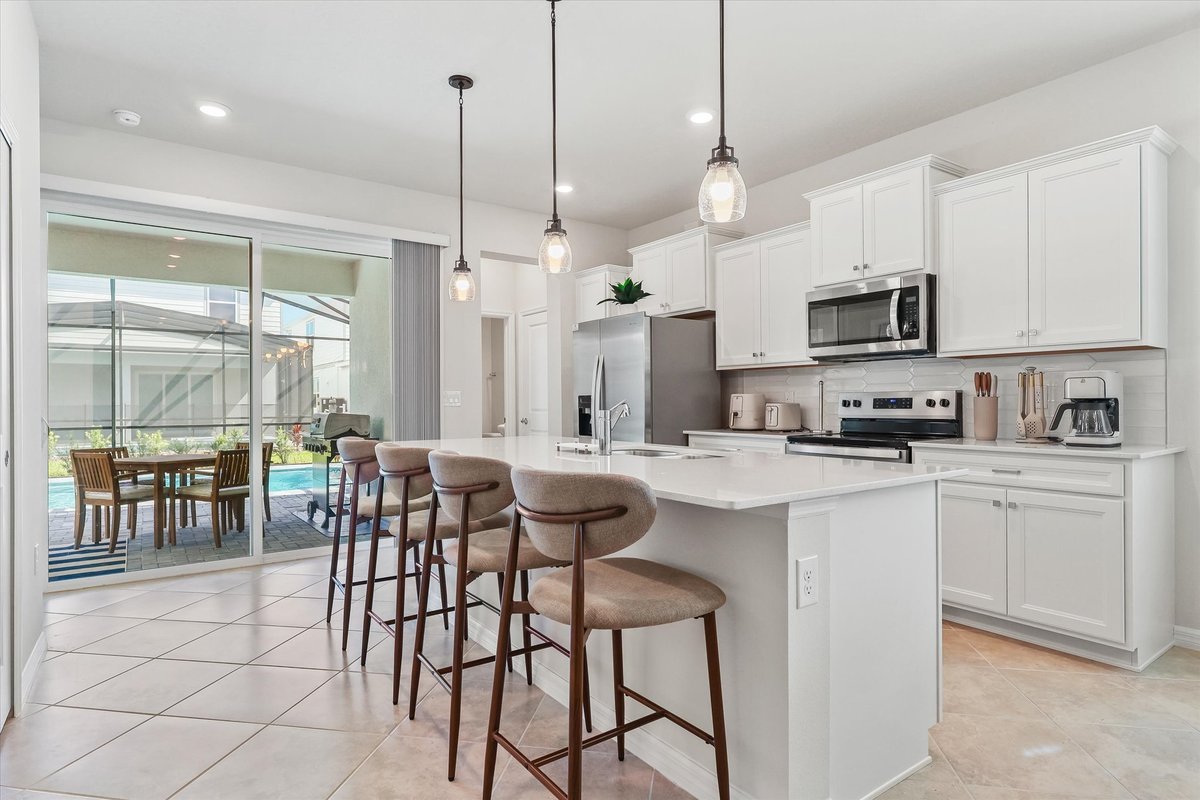
Use this connection as a shared landmark between the interior and pool photographs. A buyer should be able to locate the outdoor space when moving to the next view.
Build the sequence around those shared landmarks: main living space, kitchen, doors, covered patio, pool. The photographs do not need to imitate every step of a walkthrough, but the viewer should not have to guess whether two attractive spaces are adjacent or on different floors.
A floor plan answers the larger layout questions: which bedrooms are upstairs, where bathrooms sit and how circulation works. A 3D tour lets the buyer explore the captured spaces at their own pace. Before delivery, check that the room names agree across the gallery, plan and tour, and that the links open on a phone. Zillow describes this self-guided exploration in its 3D Home FAQ.
Ask for one clear answer: Can someone trace the route from the entrance to the main living area, bedrooms and outdoor space without needing you to explain every transition?
Question 02 · What is actually in the room?
Give distinctive features room to be understood.
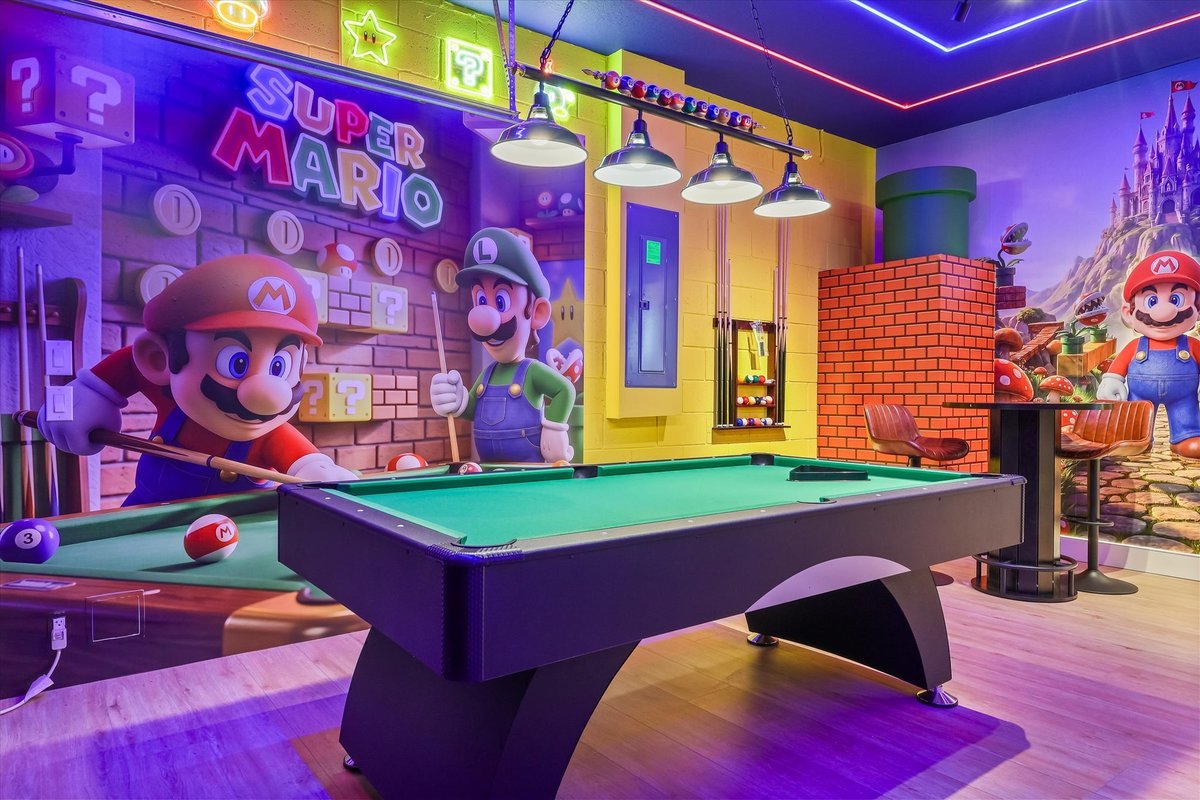
A room’s theme may attract attention, but a buyer also needs to understand the installation’s scale and position. Keep an establishing view before any close-ups of decorative details.
Pair this establishing view with another angle if the entrance or a significant part of the room is missing. If clearance around a table matters, supply actual measurements rather than estimating from a wide lens. Use the same approach for bedrooms: show bed placement and circulation, then locate the room on the plan.
The photographed furniture is a record of what was visible during the shoot. A separate inventory should establish what is included in a sale. This is especially useful when a beautifully furnished vacation-home gallery might otherwise leave a distant buyer assuming that every game, television and decorative item transfers with the property.
Question 03 · How does the outdoor space work?
Show the pool and the space around it.
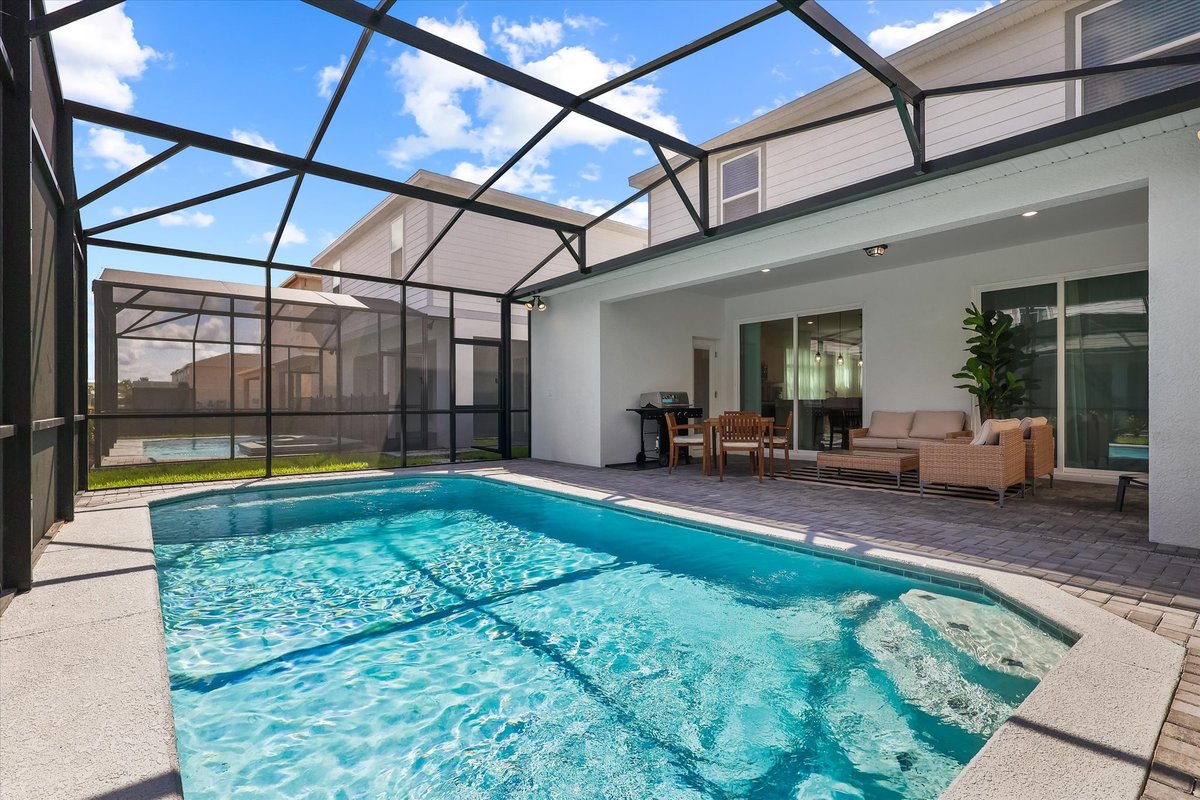
A photograph of the pool alone leaves questions about access and usable outdoor space. This wider view helps answer those questions before the buyer arranges a walkthrough.
For remote buyers, include both directions: a view from the house toward the pool and one looking back toward the covered patio. The first explains the outlook; the second shows how outdoor seating and access relate to the building. Keep visible neighboring structures in the presentation so the buyer can understand the setting.
Photographs can document visible surfaces, but they do not establish the condition of pool equipment, the operation of a heater or the history of repairs. Those questions belong in the inspection and property-information process. The media should make it easier to identify what needs a closer look.
Question 04 · What is private, and what is shared?
Put the resort in its proper context.
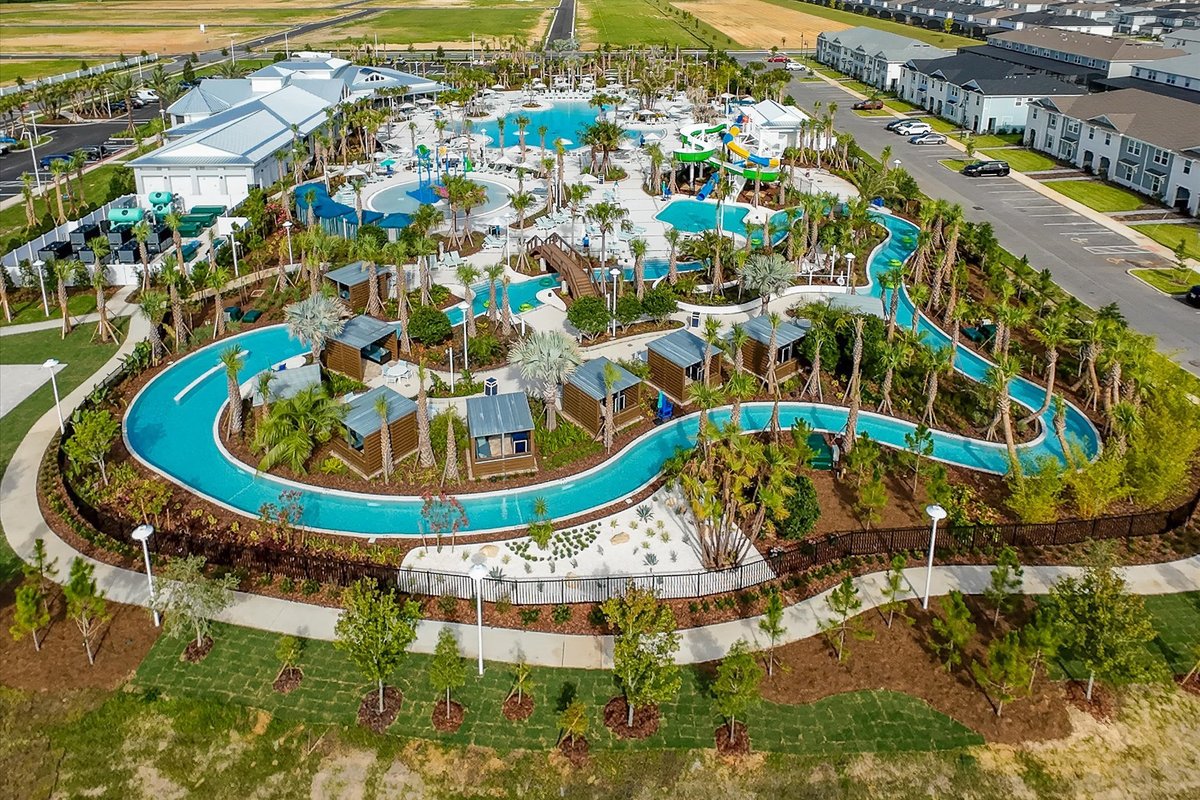
Use this aerial to introduce the shared resort setting. It explains the scale and arrangement of the recreation areas; access rights still need their own current documentation.
Label these images as community or resort amenities, and keep them distinct from the home's private pool. The next layer is verified access information: who may use the facilities, what charges or restrictions apply and whether any conditions affect the intended use. An appealing photograph does not answer those questions.
If proximity is a selling point, use a checked map or route with a clear reference point. Do not turn an aerial angle into a promised drive time, a property boundary or a claim that the featured house is the nearest one to the clubhouse. A separate aerial of the house and its immediate surroundings can answer a different question.
From a gallery to a useful buyer handoff
Use a repeatable remote-buyer handoff.
Create one handoff note for each property, using the fields below. Complete it with checked information and working links before sending it to the buyer’s agent. If a plan, tour or record is unavailable, say so and assign the follow-up.
- Property and media date. Identify the address, the listing contact and when the photographs were taken. Note material changes made since the shoot.
- Gallery, floor plan and tour. Include each available link, explain what it covers and check that room names and floor levels agree. Identify missing spaces instead of implying complete coverage.
- Private and shared amenities. Separate the home’s pool and entertainment areas from resort facilities. Link the current access information supplied by the appropriate owner or association contact.
- Included items and supporting records. Provide the dated seller-confirmed inventory and the available property records. Keep photographs of furniture distinct from the agreement about what transfers.
- Open questions and next action. List each unresolved issue, who will answer it and the follow-up date. Schedule a live agent walkthrough for views the current media does not show.
Rental income, expenses and permitted use need their own records and verification. A media package is a way to examine a property, not a return forecast. Its value here is making the visible evidence easier to understand and the unanswered questions easier to identify.
For the earlier decision about which features deserve attention, read how to showcase a home's best features and turn those priorities into the next photo brief.