

A model home should not be photographed like a house that only needs to survive one MLS listing.
That was the central idea behind this project at 1007 Apricot Ave SE in Palm Bay, Florida.
The home was already professionally staged, polished and visually complete. The challenge was not finding beautiful things to photograph.
what deserved attention, what explained the floor plan, and what could become useful visual material beyond one single gallery.
They can become a reusable visual library for the product.
The Project
The home was large, bright and fully staged, with an open main living area, large kitchen island, multiple bedrooms, bathrooms, office/flex space, laundry room and covered patio.
That level of preparation changes the photographer’s job.
In an empty property, I may spend more time trying to give rooms warmth and scale.
In a model home, the scale and lifestyle are already there.
curation.
The Biggest Risk Was Actually Photographing Too Much
A well-staged model home creates an interesting problem.
Almost every angle looks usable.
Every room has details.
Every corner has been intentionally designed.
That can easily lead to a bloated gallery with several images that say almost the same thing.
Better decisions do.
My goal was to give each image a job.
- Establish the exterior design
- Explain the main floor-plan relationships
- Show the strongest finishes
- Communicate lifestyle and scale
- Document practical spaces
- Create visual consistency from room to room
Builder Photography Is Not the Same as a Standard Listing Gallery
A typical listing is usually focused on one immediate objective: present one specific property clearly enough for buyers to evaluate it.
A builder project can have a longer life.
The same photographs may later appear in a website, brochure, social post, digital ad, presentation, floor-plan page or future conversation about a similar model.
I photograph the home as both a property and a product.
That means I need to think about more than simply completing a room-by-room checklist.
- Which image could become the hero?
- Which composition best explains the floor plan?
- Which images show finish quality?
- Which images communicate lifestyle?
- Which frames could still be useful months later?
The Exterior Has to Establish the Product
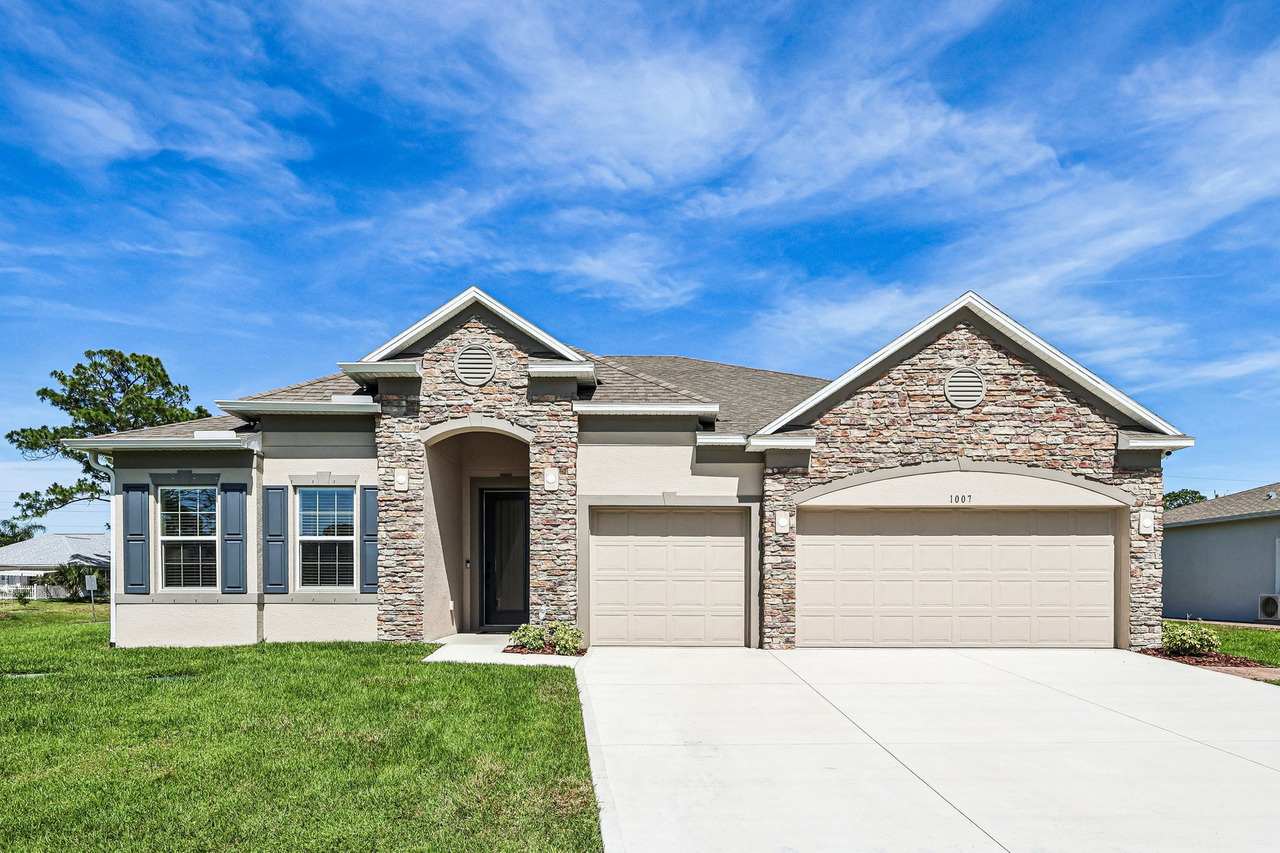
The front exterior is often the visual handshake.
At this home, the stone accents, multiple garage bays, shutters and clean architectural lines gave the elevation enough visual structure to stand on its own.
The goal was not to create an exaggerated exterior.
It was to photograph the design cleanly, control perspective and give the builder a strong establishing image.
The Kitchen Was Not Just a Room — It Was a Relationship
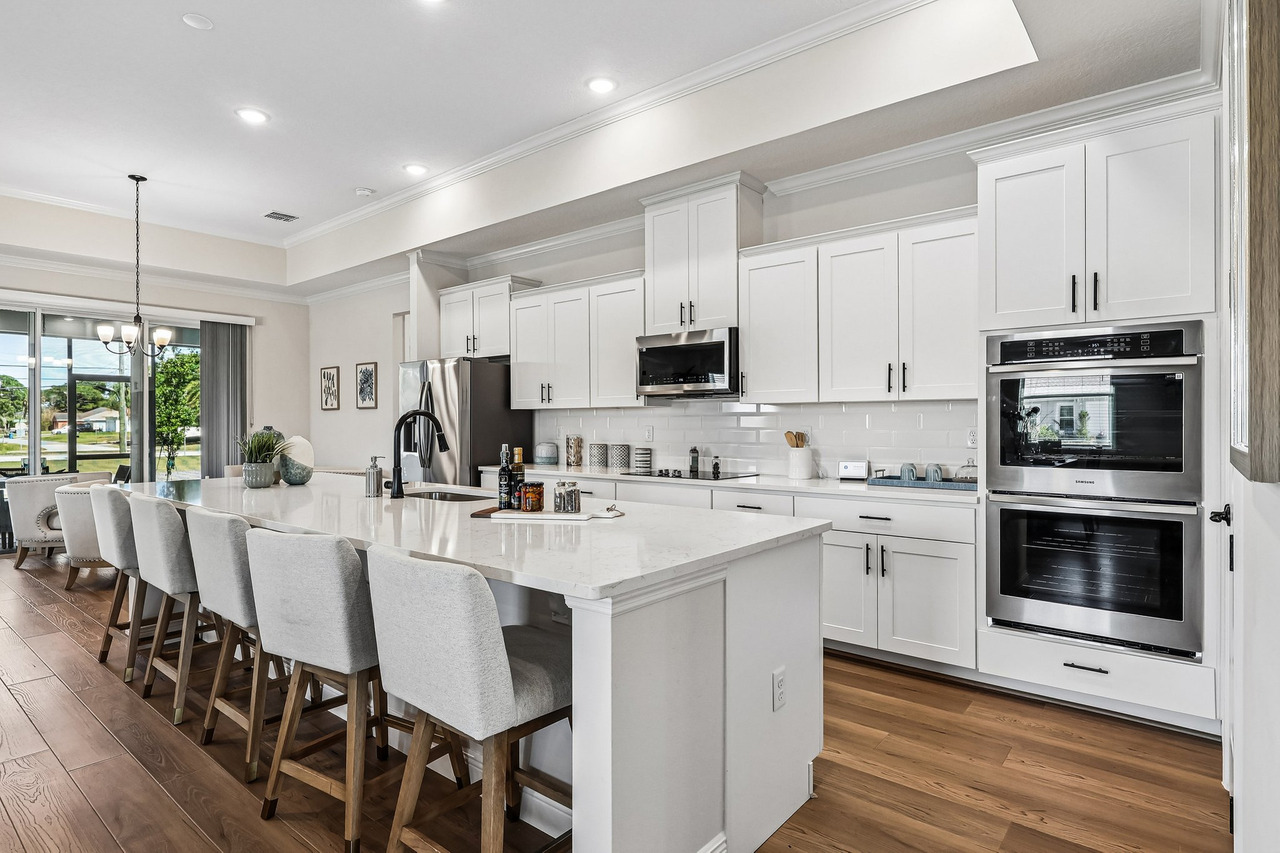
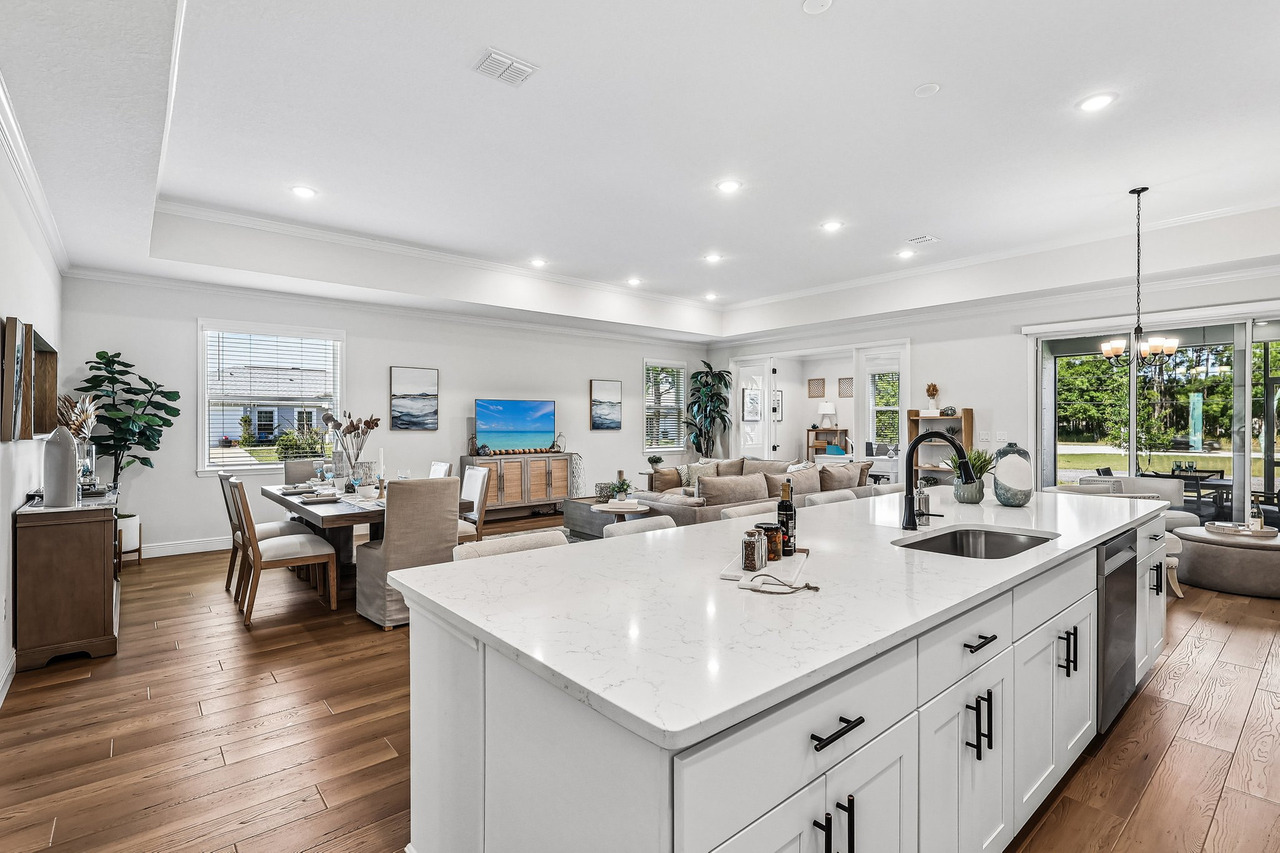
The kitchen was one of the strongest visual areas in the home.
But simply photographing cabinetry and appliances would have missed the point.
The important part was how the kitchen connected with the living room, dining space and patio.
before they ever study the actual floor plan.
That means choosing camera positions that create depth instead of making every room look like an isolated box.
Staging Helps — But It Also Creates More Things to Control
A professionally staged home looks easy to photograph.
It is not.
The cleaner the property, the more visible small inconsistencies become.
- A blind set at a different height
- A lamp that was not turned on
- A chair slightly out of alignment
- A pillow facing the wrong direction
- A door position breaking symmetry
- A reflection appearing in glass or mirrors
- A small decorative object pulling attention away from the room
Before photographing, I walk through the spaces and look for those details.
The camera records more than the eye notices while walking through a room.
The Living Area Needed Depth, Not Just Width
Wide-angle photography is useful in real estate, but width alone does not explain a space.
For the living room, I wanted foreground, middle ground and background working together.
Furniture helps create scale, but the composition still needs to show where the room leads.
A buyer should be able to understand that this is not simply a staged seating area—it is part of a larger living system inside the home.
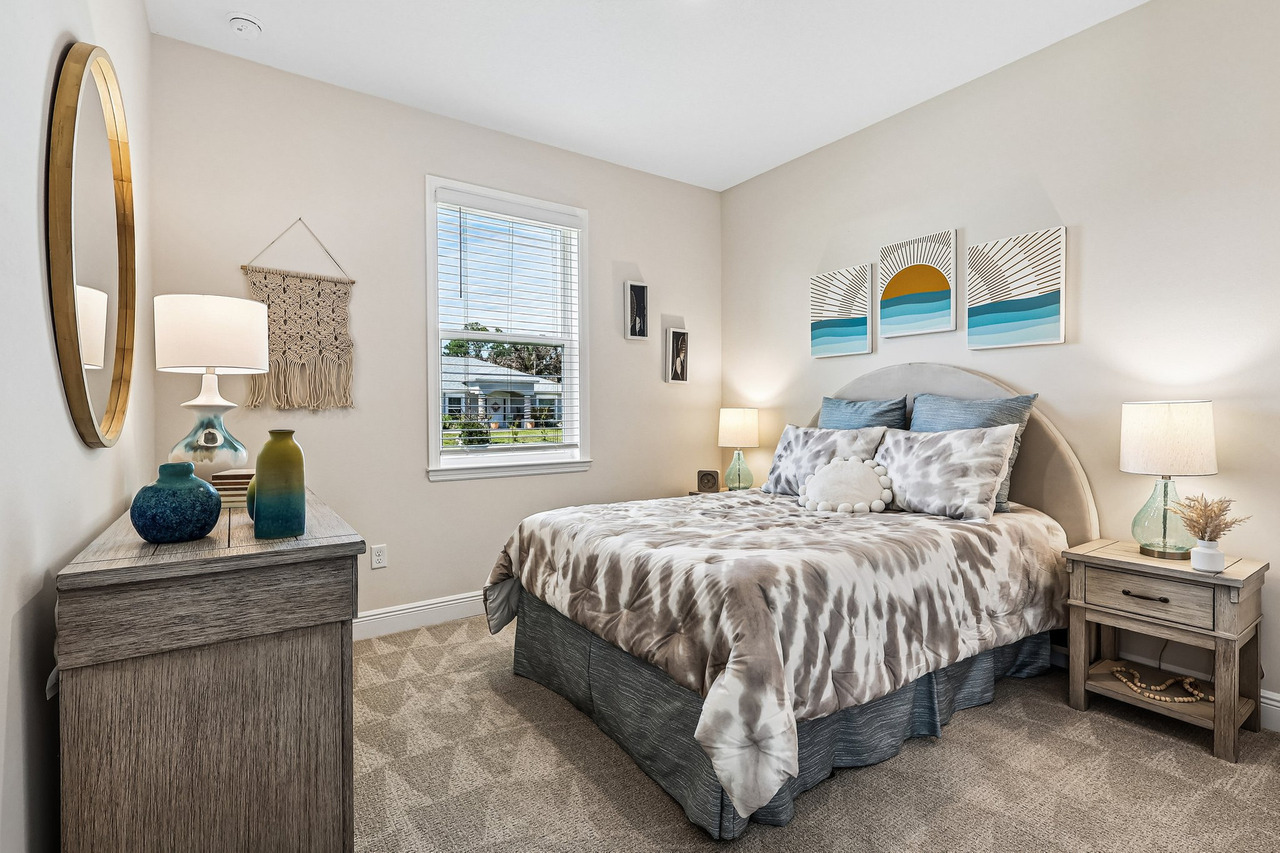
The Bedrooms Needed Different Personalities Without Breaking the Visual Story
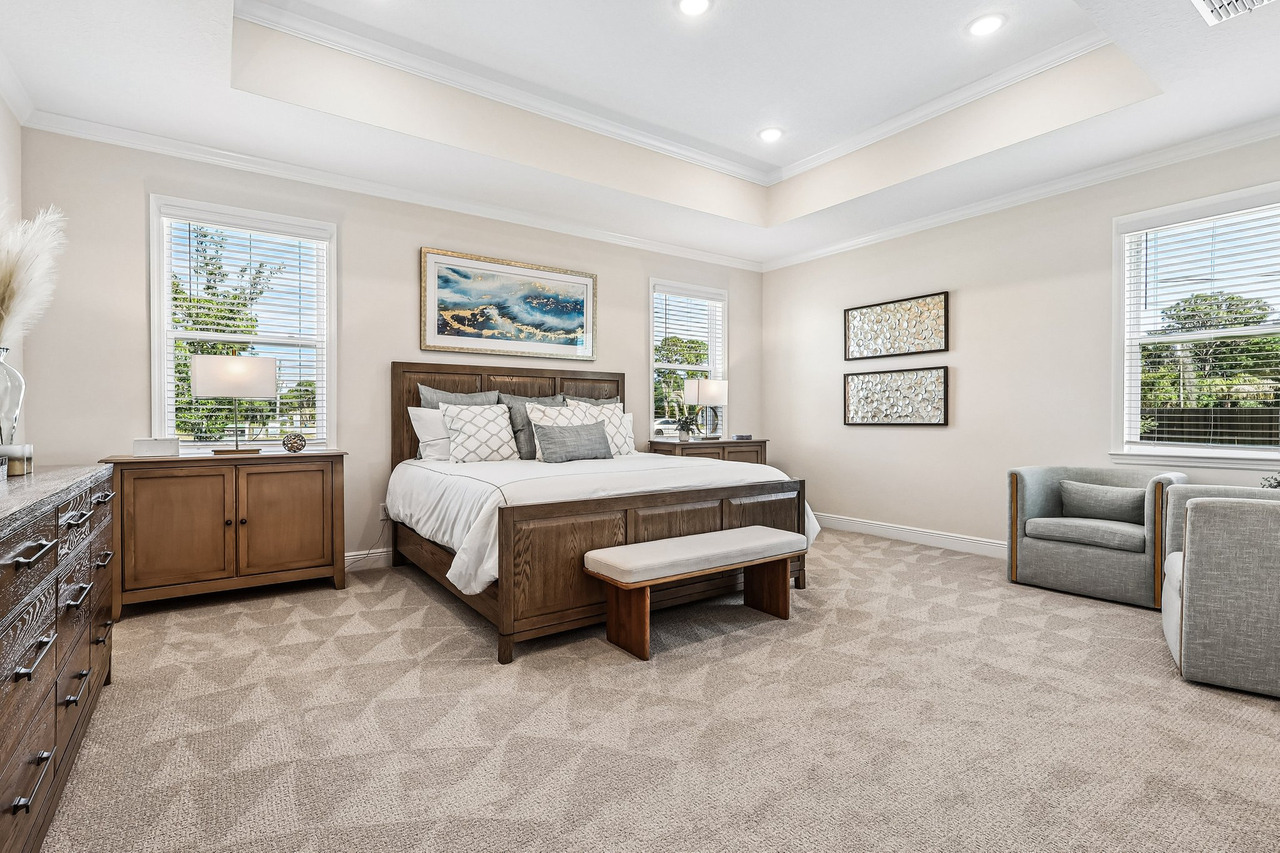
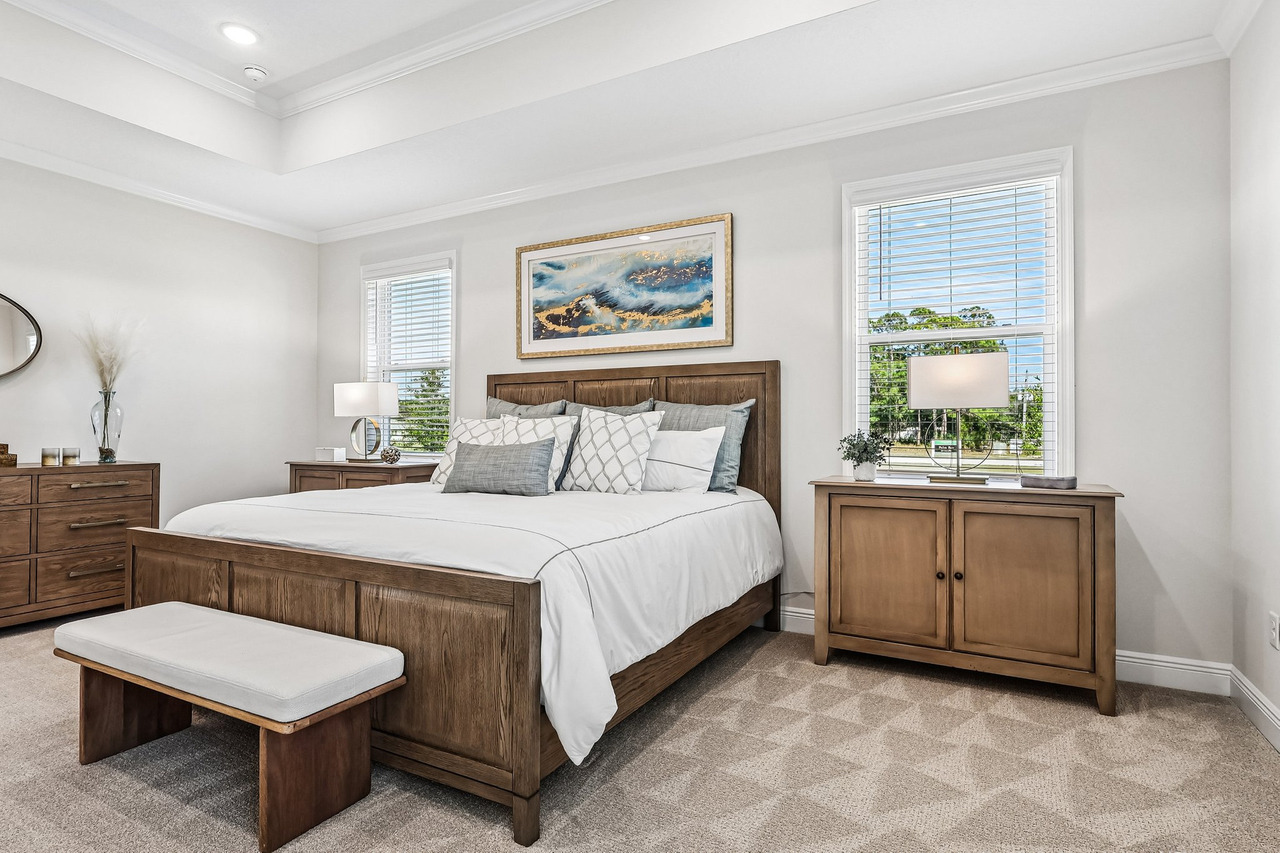
The bedrooms used layered neutrals, blues, wood tones and coastal-inspired decor.
The staging helped each room suggest a different use without making the property feel visually fragmented.
My job was to preserve that intention.
It needs to look understandable, balanced and finished.
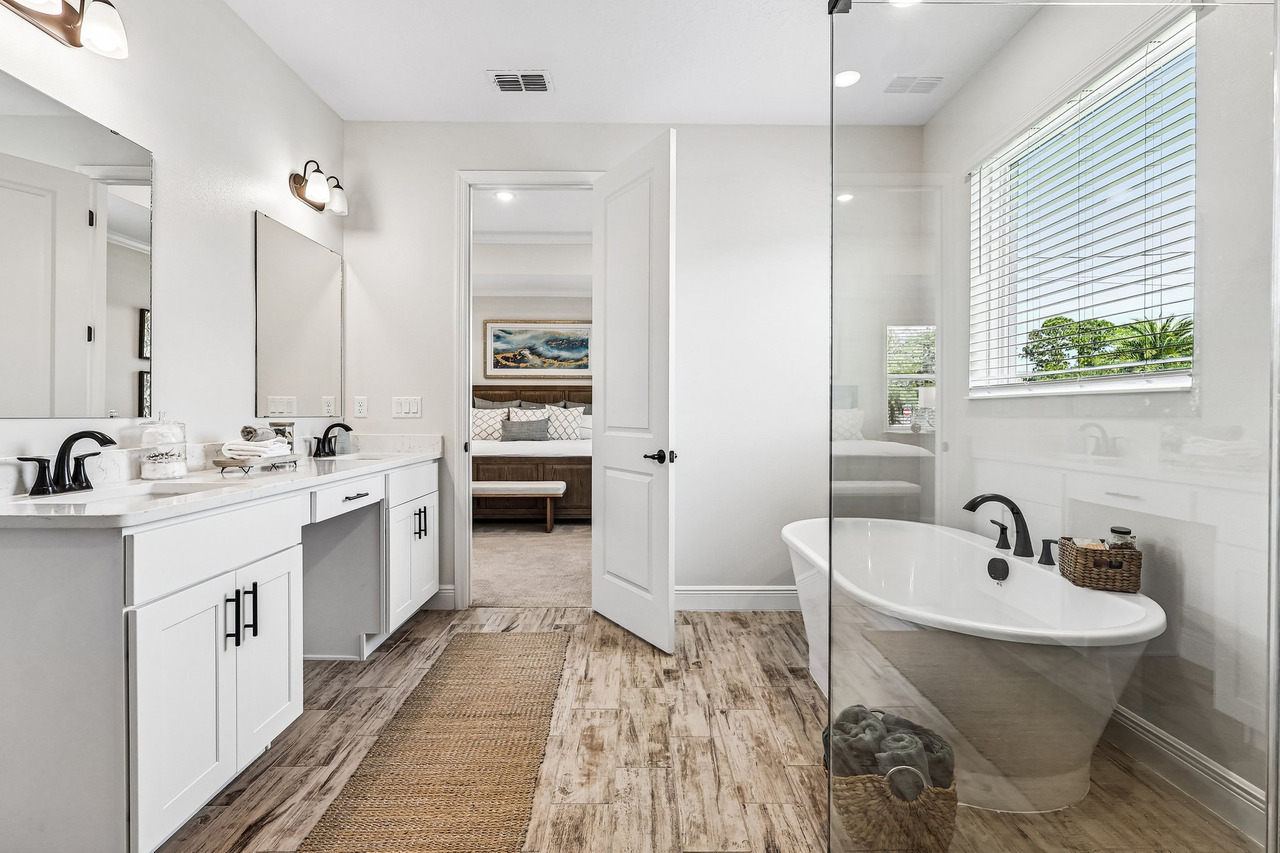
Bathrooms Require Precision Because Everything Reflects
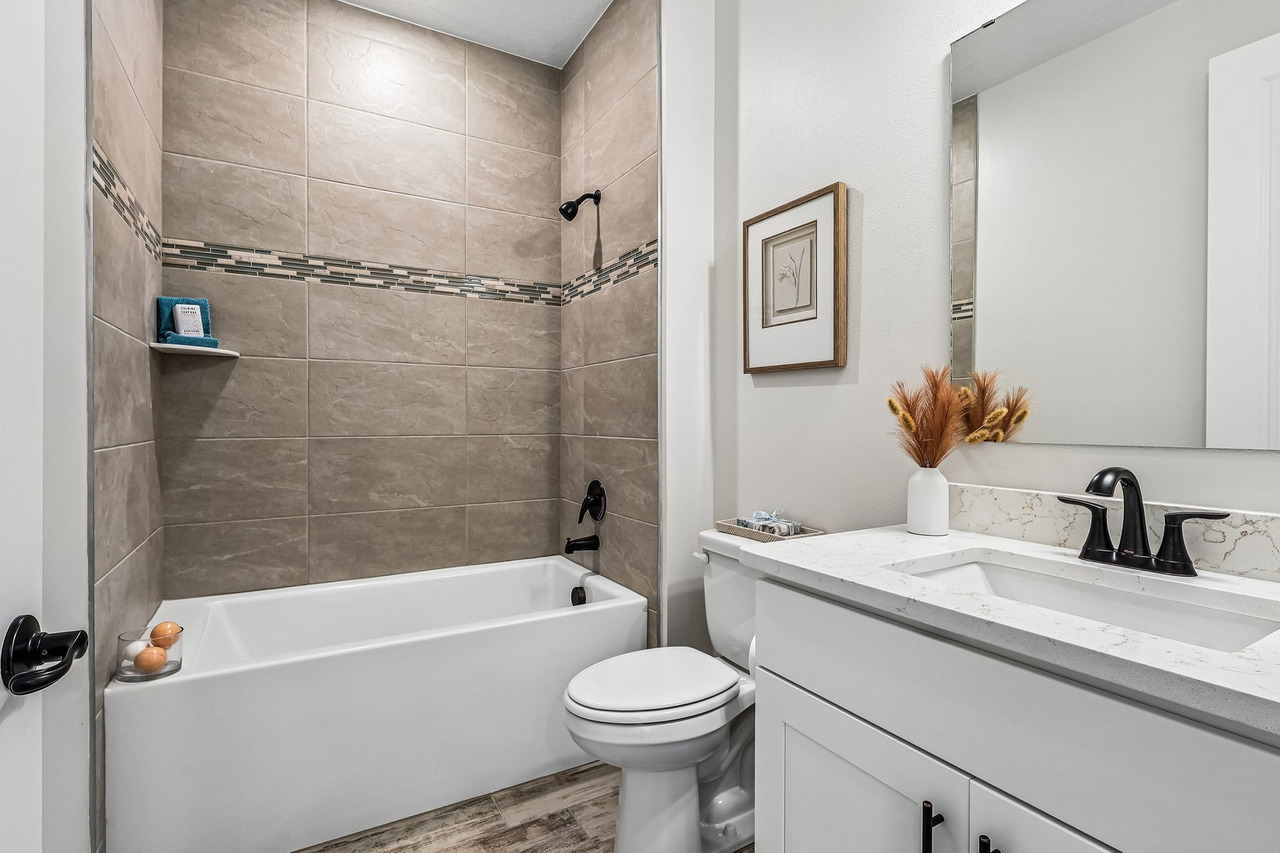
Bathrooms are one of the easiest places to create distracting photographs.
Mirrors, shower glass, fixtures and bright surfaces can pull attention in several directions at once.
The goal is to show finish quality without allowing the photograph to become visually busy.
A clean bathroom image should explain the vanity, shower, tile and circulation without turning the photographer into part of the photograph.
The Office and Flex Spaces Matter Because They Explain Possibility
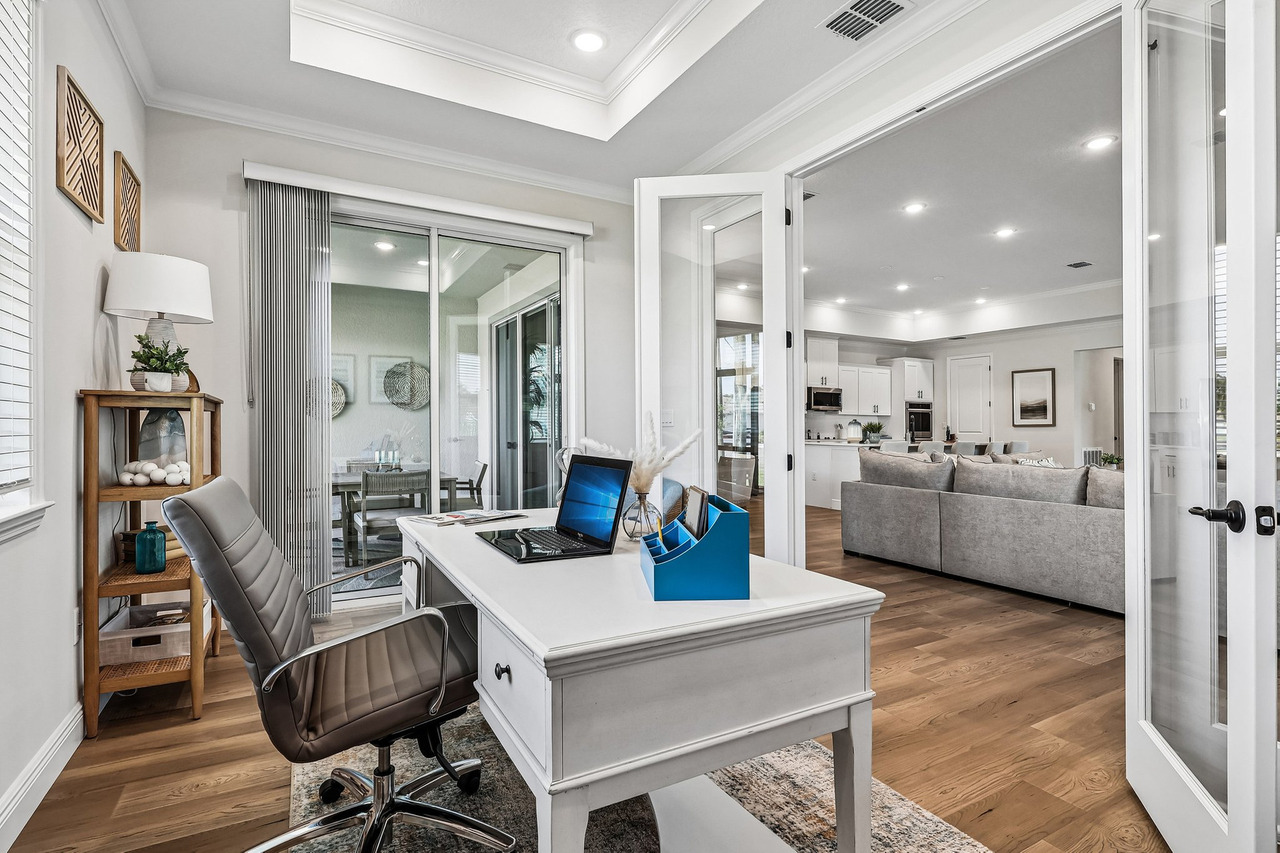
A model home is partly an exercise in helping someone imagine how the floor plan could work for them.
That is why flex rooms deserve more attention than a simple “bonus room” photograph.
When the staging shows an office, reading space or secondary living function, the photograph should make that use immediately understandable.
The Covered Patio Completed the Lifestyle Story
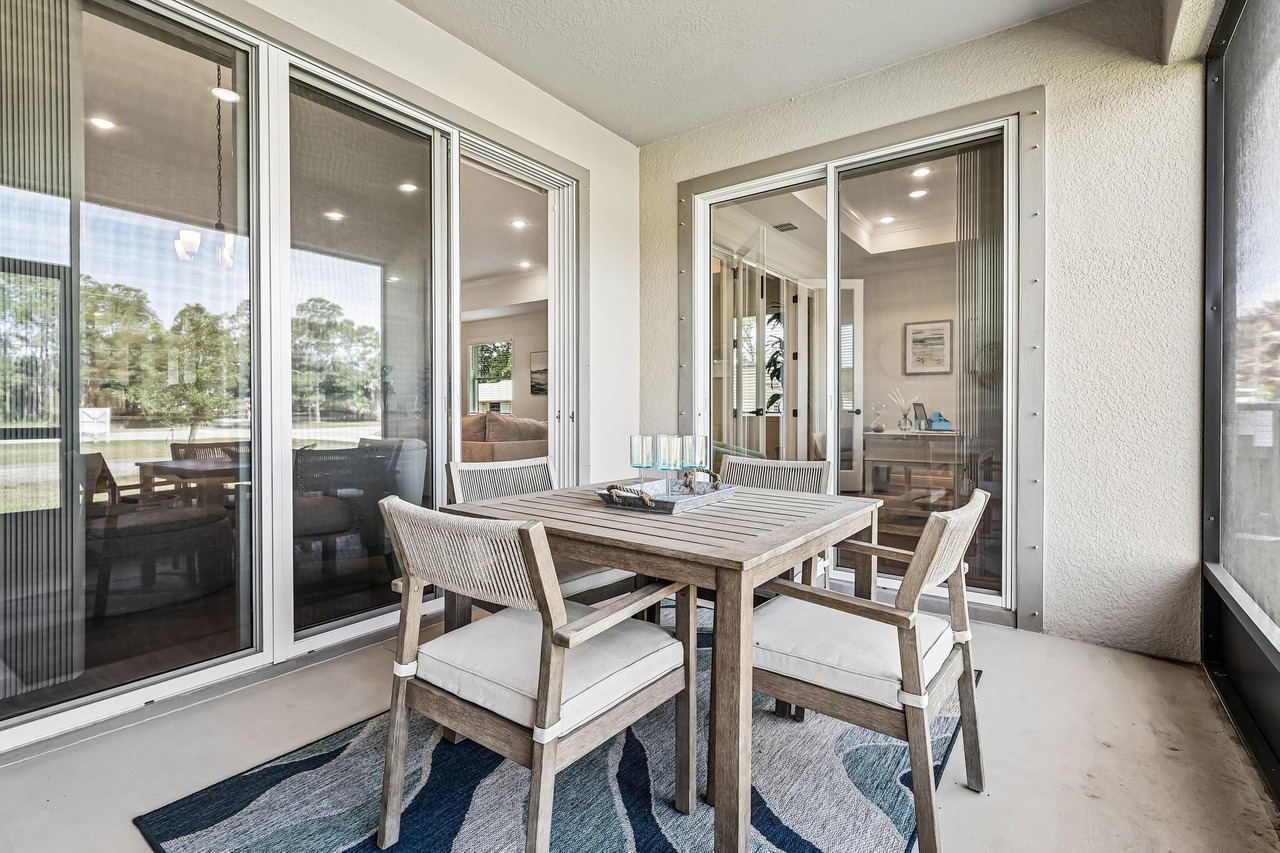
The patio was not a dramatic resort-style outdoor environment.
That was not a problem.
Its role was different.
It showed a practical connection between the interior and everyday Florida outdoor living.
That made it part of the complete story of the floor plan.
Why I Did Not Use Drone Photography Here
knowing what not to add.
Drone photography can be extremely valuable when altitude reveals location, water, acreage, conservation, amenities or development context.
For this project, the strongest story was inside the property.
The staging, finishes, layout and room relationships deserved the attention.
Every asset should have a reason to exist.
The Floor Plan and 3D Tour Added a Different Kind of Information
Photography communicates design and atmosphere extremely well.
But a large home can still be difficult to understand through photographs alone.
That is why the project also included a floor plan and 3D tour.
Photography + Spatial Information
- Photography:
- Floor plan:
- 3D tour:
The strongest media packages work because the different formats answer different questions.
The Real Value for a Builder Is the Library
This is where model-home photography becomes strategically different from a normal listing shoot.
A listing gallery may stop being useful when the property leaves the market.
A strong builder library can keep working.
- Builder website
- Model or floor-plan pages
- Sales presentations
- Social media
- Digital advertising
- Email campaigns
- Community marketing
- Future buyer conversations
- Portfolio and brand materials
The media can become an asset for many future conversations.
What This Project Actually Proves
I do not need to claim that professional photography caused a particular sale to make this case useful.
That would be stronger than the evidence allows.
What this project demonstrates directly is that one carefully photographed model home can produce a polished, organized visual library covering architecture, staging, room flow, finishes and spatial information.
a complete presentation of the builder’s finished product.
How I Approach Model Home Photography Differently
- I look for hero images before trying to photograph every possible angle
- I preserve architectural lines and room proportions
- I use staging to explain scale rather than letting decor dominate
- I photograph room relationships, not only individual rooms
- I document finishes without turning the gallery into a detail catalog
- I include practical spaces when they help explain the floor plan
- I think about future builder use, not only the immediate listing
Frequently Asked Questions
Is model home photography different from regular real estate photography?
Yes. A normal listing is usually focused on marketing one property. Model-home photography can also create reusable imagery for the builder’s website, sales presentations, advertising, social media and future buyer conversations.
Why is image curation important in a staged model home?
Because nearly every angle may look attractive. Too many similar images can weaken the gallery. The goal is to select photographs that each communicate something useful about design, layout, finishes or lifestyle.
Why was drone photography not used for this project?
The strongest visual story was inside the home. The staging, finishes and floor-plan relationships provided more useful marketing material than an aerial perspective for this particular project.
Why include a floor plan with professional photography?
Photography shows how spaces look and feel. A floor plan helps viewers understand how those spaces connect.
Can model-home photographs be reused by a builder?
Potentially, yes. Depending on the builder’s rights and marketing needs, a polished visual library can support websites, social content, presentations, ads and future marketing of similar plans or finishes.
What should be checked before photographing a staged model home?
Lighting, blinds, chairs, pillows, bedding, reflections, doors, rugs, towels, decorative objects and visual symmetry all deserve attention. In a polished home, small inconsistencies are easier to notice.
Need Media Built for More Than One Listing?
Model homes, new construction and builder communities need photography that can work across websites, portfolios, presentations and sales conversations.
Tell me about the project and the media you need to create.

Gustavo Sousa
Gustavo Sousa is a professional real estate photographer, videographer and FAA Part 107 Certified Remote Pilot based in Winter Garden, Florida.
A professional photographer since 2012, he works with residential properties, builders, new construction, vacation homes and real estate professionals across Central Florida.


